

mSytems 2026
Tools and approaches to study the human gut virome: from the bench to bioinformatics
Tools and approaches to study the human gut virome: from the bench to bioinformatics
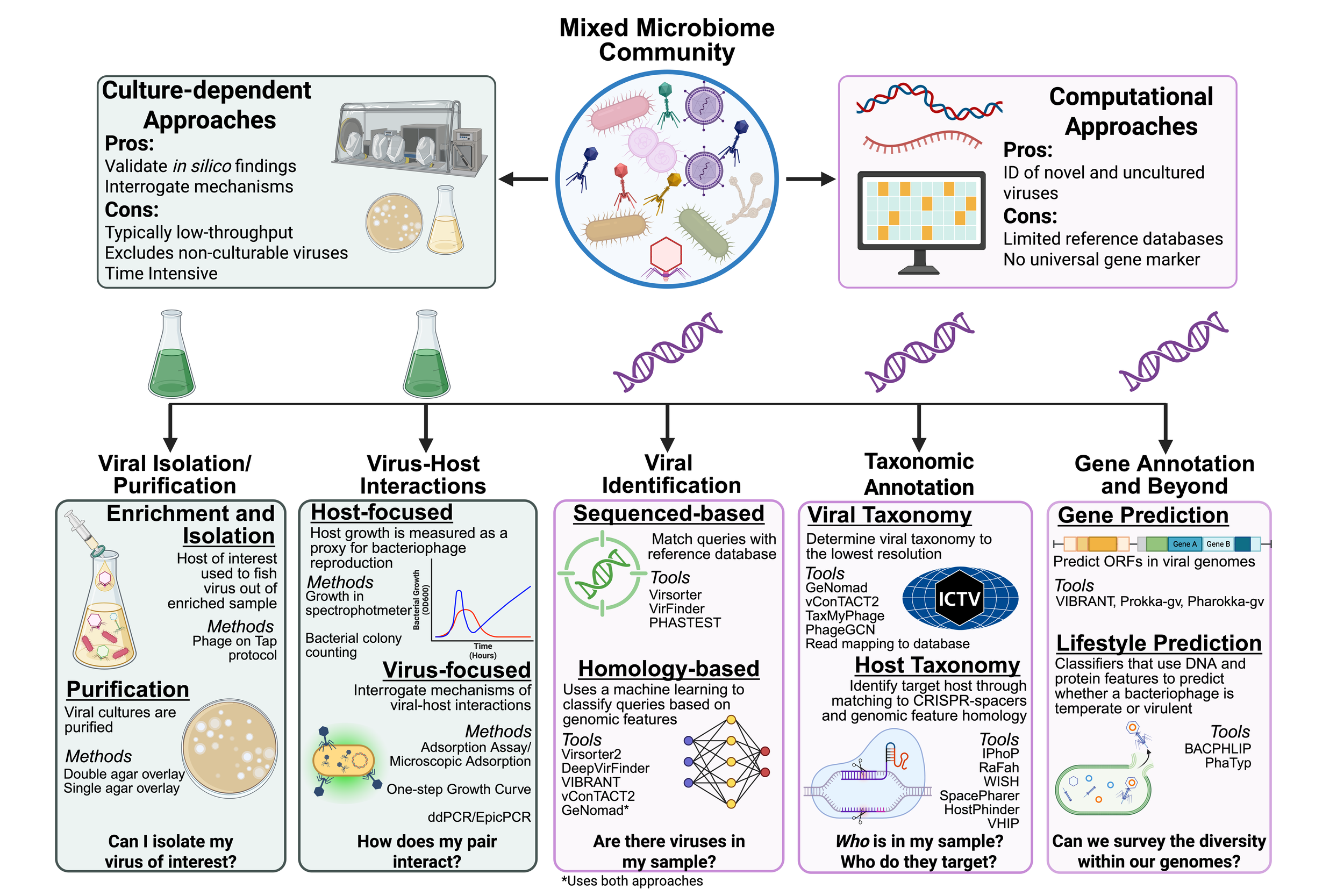
The human gastrointestinal tract is home to a diverse community of microorganisms from all domains of life, collectively referred to as the gut microbiome. While gut bacteria have been studied extensively in relation to human host health and physiology, other constituents remain underexplored. This includes the gut virome, the collection of bacteriophages, eukaryotic viruses, and other mobile genetic elements present in the intestine. Like gut bacteria, the gut virome has been causatively linked to human health and disease. However, the gut virome is substantially more difficult to characterize, given its high diversity and complexity, as well as multiple challenges related to in vitro cultivation and in silico detection and annotation. In this mini-review, we describe various methodologies for examining the gut virome using both culture-dependent and culture-independent tools. We highlight in vitro and in vivo approaches to cultivate viruses and characterize viral-bacterial host dynamics, as well as high-throughput screens to interrogate these relationships. We also outline a general workflow for identifying and characterizing uncultivated viral genomes from fecal metagenomes, along with several key considerations throughout the process. More broadly, we aim to highlight the opportunities to synergize and streamline wet- and dry-lab techniques to robustly and comprehensively interrogate the human gut virome.
Click here to read the full paper.